
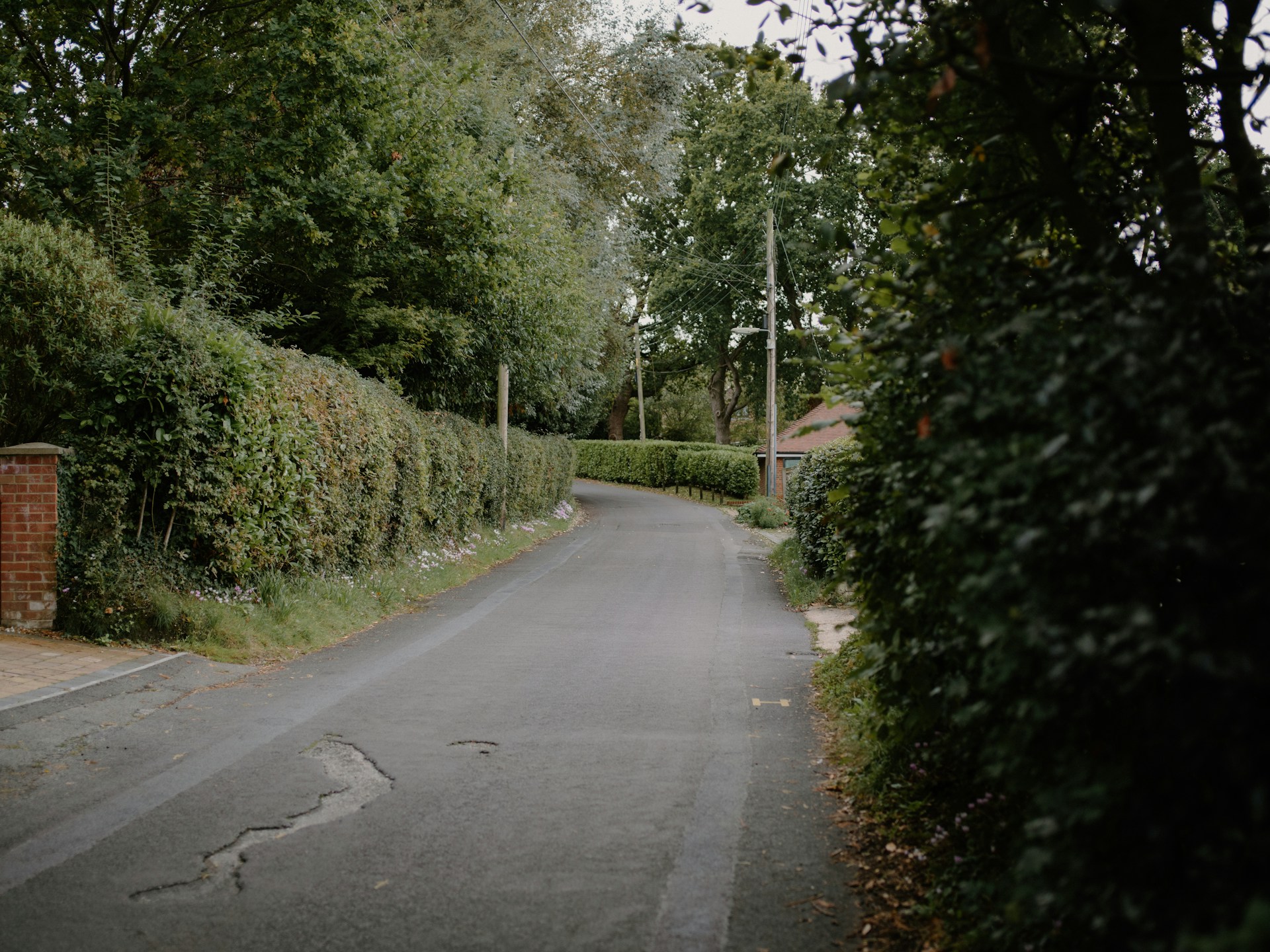
Property disputes between neighbours often arise over access rights, driveways, and easements. When the physical use of land differs from what is recorded on title, disagreements can quickly escalate into litigation.
In Brown v. Volcz, the Supreme Court of British Columbia addressed a dispute between neighbouring property owners in Pitt Meadows over the use of a driveway. The petitioners sought to establish an equitable easement over their neighbours’ driveway or, alternatively, to rectify an existing registered easement so that it aligned with the physical laneway used for access.
The Court ultimately rejected both claims. The decision offers a useful overview of the legal principles governing equitable easements, proprietary estoppel, and rectification of easement agreements in British Columbia property law.
Laneway at Centre of Neighbour Dispute
The dispute involved neighbouring properties located in Pitt Meadows, British Columbia. The petitioners purchased their property in 2015. The respondents purchased the neighbouring property in 2019.
When the petitioners purchased their property, they accessed their home by vehicle using a laneway that ran along the respondents’ driveway. However, a registered easement already existed on title that provided access to the petitioners’ property.
The key issue was that the existing laneway did not align with the registered easement. Instead of running over the respondents’ driveway, the easement actually ran beside it in an area where no roadway had been constructed.
For several years, the petitioners continued using the laneway without dispute. However, after the respondents purchased the neighbouring property in 2019, they obtained a survey indicating that the laneway did not match the registered easement location. The respondents eventually installed a gate blocking the petitioners’ use of the laneway in June 2023. From that point forward, the petitioners were forced to rely on an alternative access route to reach their property.
Equitable Easement Declaration Sought After Property Access Blocked
In response to losing access to the laneway, the petitioners filed a petition in the Supreme Court of British Columbia. They asked the Court to grant them one of two remedies.
First, they sought a declaration of an equitable easement over the existing laneway. In essence, they argued that they had developed a legal right to use the laneway based on representations made by the previous property owner and their longstanding reliance on that access route.
Alternatively, if the Court declined to recognize an equitable easement, the petitioners asked the Court to rectify the registered easement so that it matched the location of the existing laneway. The respondents opposed both forms of relief.
Legal Principles Governing Equitable Easements
The petitioners’ claim for an equitable easement relied on the doctrine of proprietary estoppel, an equitable principle designed to prevent unfairness when one party relies on another’s promise regarding property rights.
To establish proprietary estoppel and obtain an equitable easement, a claimant must prove three elements:
- A representation or assurance that they would have an interest in the property;
- Reasonable reliance on that representation; and
- Detriment suffered as a result of the reliance.
If these elements are satisfied, a court may grant an equitable remedy where it would otherwise be unconscionable for the property owner to deny the promised rights.
The petitioners argued that the previous owner of the respondents’ property had assured them that they could use the laneway, and that they relied on this understanding when purchasing and improving their property.
Were the Petitioners Told They Could Use the Laneway?
The first issue the Court examined was whether the petitioners had received any assurances that they had a legal right to use the laneway. The petitioners alleged that the previous property owner had represented that they could continue using the laneway to access their home. They also argued that the respondents implicitly confirmed those rights by allowing the petitioners to continue using the laneway after purchasing the property.
The Court found that the evidence supporting these claims was vague and inconsistent. The petitioners’ affidavit evidence regarding representations by the previous owner relied heavily on hearsay and lacked specific details. The Court also noted that the petitioners’ earlier affidavit did not mention these alleged representations, raising concerns about reliability.
By contrast, the respondents stated that they informed the petitioners shortly after purchasing the property that the laneway did not correspond with the registered easement. They allowed the petitioners to continue using the laneway temporarily but considered that permission to be revocable at any time.
The Court accepted the respondents’ evidence and found that no representation had been made that could reasonably lead the petitioners to believe they had a permanent right to use the laneway.
Lack of Detrimental Reliance
Even if the petitioners had established a representation, the Court concluded that they failed to demonstrate detrimental reliance. The petitioners argued that they made improvements to their property and maintained the laneway in reliance on their ability to use it.
However, the Court found little evidence supporting these claims. The petitioners did not provide specific details about the repairs or improvements they allegedly made to the laneway, nor did they demonstrate significant financial or personal loss resulting from their reliance.
In fact, the Court noted that the petitioners had constructed a second access route to their property in 2017. This alternative driveway provided direct access to their property and, in some respects, improved their access options.
Because the petitioners could still access their property via this alternative route, the Court found they had not suffered a meaningful detriment.
The Court Also Rejected Rectification of the Easement
After rejecting the equitable easement claim, the Court considered the petitioners’ alternative request for rectification of the registered easement.
Rectification is a remedy used to correct a written agreement that fails to reflect the parties’ true intentions due to a mistake. To succeed in a rectification claim, the party seeking the remedy must show that:
- The original parties had reached a prior agreement;
- The written instrument failed to accurately reflect that agreement; and
- Rectifying the document would restore the parties’ true intentions.
In this case, the Court found no evidence of a prior agreement that differed from the terms of the registered easement. The individuals who originally created the easement in 1994 were not involved in the litigation and did not provide evidence. As a result, the Court could not conclude that the easement document failed to reflect their true intentions. Therefore, the rectification claim failed.
Existing Easement Rights Still Allow Access
Although the petitioners were unsuccessful in their petition, the Court noted that they still retain legal access rights under the existing registered easement.
The easement allows the petitioners to construct a driveway in the correct location identified in the registered plan. The Court indicated that the petitioners remain free to build a new access route that aligns with the registered easement if they wish to access their property from the main road.
In other words, while the petitioners could not continue using the respondents’ driveway, they still had a legally recognized path to establish access in accordance with the registered easement.
Costs Awarded to the Respondents
Because the respondents successfully defended the petition, the Court awarded them costs.
The Court also noted that the easement agreement itself contained a broad indemnity clause, which required the dominant property owner to compensate the servient property owner for costs arising from disputes relating to the easement. This clause reinforced the respondents’ entitlement to recover legal costs incurred during the litigation.
Contact Meridian Law Group for Dynamic Advocacy in B.C. Property & Neighbour Disputes
Neighbour disputes involving easements, property access, and land use can quickly become complex legal matters. The property dispute lawyers at Meridian Law Group provide top-tier legal solutions in easement and right-of-way disputes, property boundary and access conflicts, proprietary estoppel claims, real estate litigation and land title issues.
If you are facing a dispute over property access or easement rights, contact the firm online or call (604) 687-2277 to discuss your legal options and protect your property interests.