Marriage agreements can take many forms, including culturally specific agreements created in accordance with religious traditions. In Canada’s multicultural legal system, courts are often asked to determine whether these agreements are legally enforceable under provincial family law.
In Soltani v. Fadaee Estate, the Supreme Court of British Columbia addressed the enforceability of an Islamic marriage contract following the death of one spouse. The case involved claims to real estate, the value of a traditional Islamic marital gift known as a Mahr, and disputes over credibility and financial arrangements within a family.
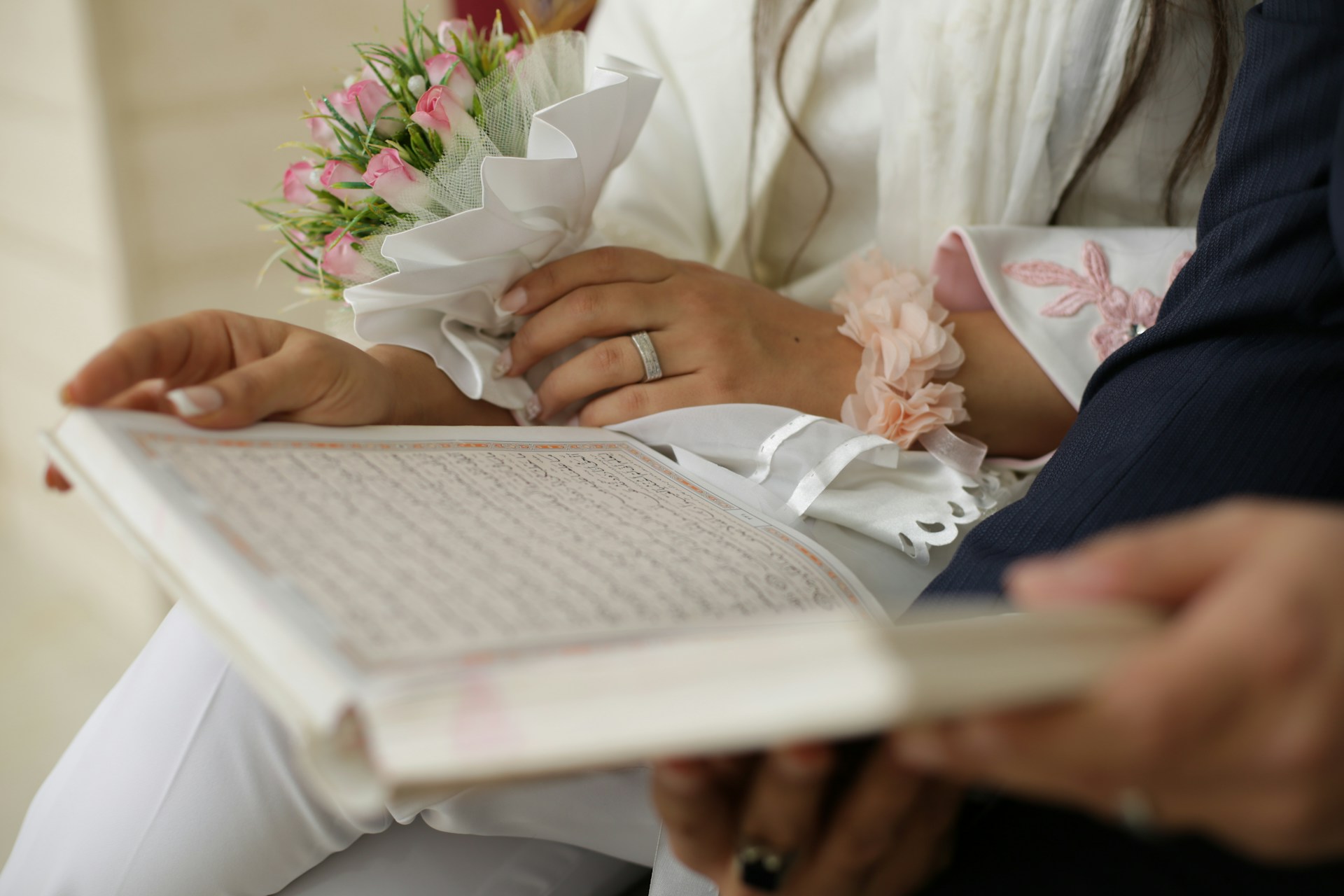
Couple Married in Islamic Tradition
The wife married the husband in August 2016 following an online relationship and a relatively short courtship. The couple first participated in a traditional Islamic marriage ceremony, followed later that month by a civil marriage in British Columbia and a family celebration in Mexico.
As part of the Islamic ceremony, the couple entered into a written marriage agreement known as a Nikah Nameh. This agreement included a provision requiring the husband to give his wife 250 Bahar Azadi gold coins as a marital gift (the Mahr), along with a clause stating that any future property would be shared equally between the spouses.
At the time of the marriage, the husband was a business owner living in Vancouver who had immigrated to Canada from Iran in the 1990s. The wife had moved to Canada from Iran to pursue graduate studies in engineering and relocated to Vancouver after the marriage.
Shortly after the wedding, however, the husband was diagnosed with leukemia. The couple separated in February 2019, and the husband passed away exactly one year later at age 50. Following his death, disputes arose between the spouses’ families regarding the division of property and the enforceability of the Islamic marriage agreement.
Dispute Involved Marital Gift & Husband’s Real Estate
The litigation raised several complex legal questions, including:
- Whether the Nikah Nameh constituted an enforceable marriage agreement under British Columbia law;
- Whether the wife was entitled to the value of the Mahr;
- Whether she had claims to certain real estate allegedly connected to the husband; and
- How the court should evaluate conflicting testimony from family members and estate representatives.
The case ultimately turned heavily on credibility findings and the interpretation of the marriage agreement within the framework of the Family Law Act.
Enforceability of the Islamic Marriage Agreement
One of the central issues before the Court was whether the Nikah Nameh could be enforced as a valid marriage agreement.
Under British Columbia’s Family Law Act, spouses are permitted to enter into agreements regarding property division. Courts have recognized that religious marriage contracts, including Islamic marriage agreements, may qualify as enforceable contracts if they meet the legal requirements for a marriage agreement.
The Court noted that Canadian courts have increasingly recognized Mahr provisions as valid contractual obligations when the evidence demonstrates that the parties intended the agreement to be legally binding.
In this case, the Nikah Nameh clearly stated that the wife would receive 250 gold coins and that the parties would share ownership of property acquired during the marriage. The evidence showed that the husband arranged the ceremony, provided the necessary information for the contract, and signed the document in the presence of witnesses. The Court therefore concluded that the agreement met the requirements of a binding written marriage contract.
The Husband’s Challenged Agreement Before His Death
Before his death, the husband swore an affidavit claiming that he had signed the Nikah Nameh under pressure and without understanding its legal consequences. He also argued that the agreement was not intended to be enforceable unless it was registered with Iranian authorities.
The Court rejected these arguments, concluding that the evidence did not support the husband’s claims that he had been pressured or misled. The video of the ceremony and the surrounding circumstances showed a relaxed and voluntary agreement between the parties.
The Court also noted that the husband was an experienced businessperson who had previously been married and had been familiar with the concept of a Mahr in Islamic marriage traditions. As a result, the Court found that his later affidavit statements were not credible.
Credibility Findings and Family Evidence
A significant portion of the judgment focused on the credibility of witnesses. The husband’s sister, who acted as the estate representative, asserted that the husband had owed large debts to his parents and that the wife possessed significant undisclosed assets in Iran.
However, the Court found that these claims were unsupported by documentation and contradicted by other evidence presented at trial. Similarly, the Court determined that certain financial arrangements described by family members (such as alleged loans and unpaid rent) were not supported by reliable records and appeared to have been created after the parties separated.
In contrast, the Court found the wife to be a credible witness and accepted much of her testimony regarding the marriage, the agreement, and the parties’ financial arrangements.
Claims to Husband’s Real Estate
The litigation also involved several residential properties connected to the husband or his family. The Court carefully examined whether these properties formed part of the couple’s family property under the Family Law Act.
Ultimately, the Court determined that most of the properties were excluded property because they had been acquired before the marriage or were owned jointly with the husband’s parents.
However, one property (a condominium) had been acquired after the marriage and was registered in the husband’s name. Because this property was purchased during the marriage, it was treated differently from the other properties.
Wife Entitled to Benefits Under Marriage Agreement & Condo
After considering all the evidence, the Court concluded that the wife was entitled to significant relief under both the marriage agreement and family property law. In summary:
- The Nikah Nameh was a valid and enforceable marriage agreement;
- The wife was entitled to the value of the 250 gold coins, approximately $200,000;
- She was also awarded one of the husband’s residential properties, subject to paying certain mortgage-related obligations and a payment to the estate after accounting adjustments.
The Court therefore granted the wife a substantial financial award despite the opposition of the estate and other family members.
Meridian Law Group: Providing Dynamic Family Law Solutions in Vancouver
Family law and estate disputes can become complicated when marriage agreements, property ownership, and cultural traditions intersect. The family lawyers at Meridian Law Group assist clients with marriage agreement disputes, family property and excluded property claims, estate litigation involving spouses or former spouses, and enforcement or challenges to marriage contracts. To discuss your family dispute, please contact the firm online or call (604) 687-2277.